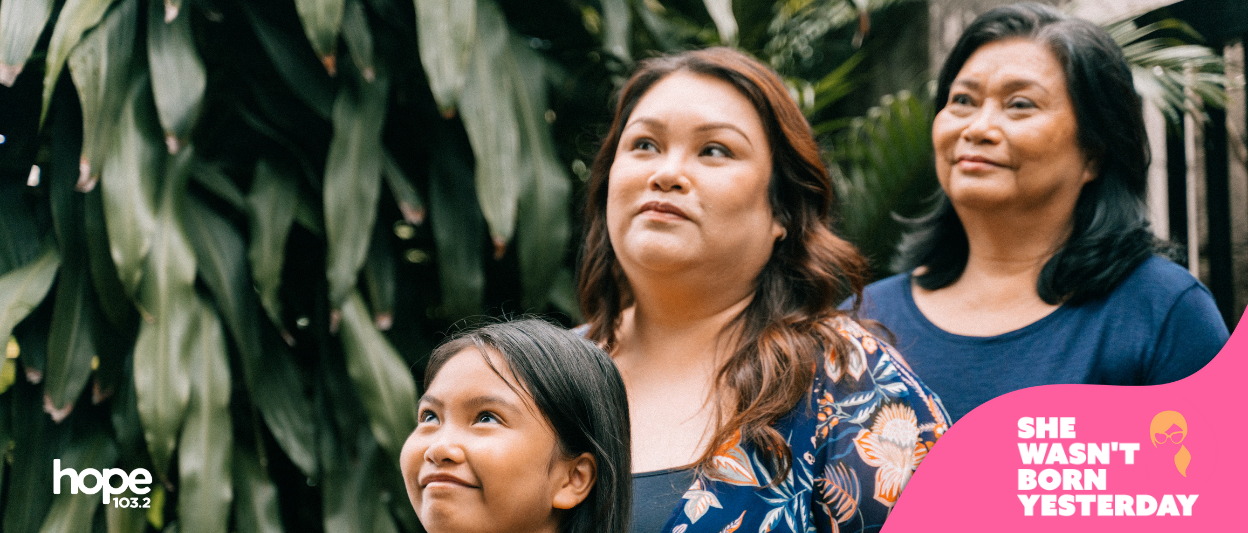
This episode of ‘She Wasn’t Born Yesterday’ has been requested by quite a few of our listeners.
Key points:
- “Forgiveness needs to be genuine, not just a Band-Aid. It’s about mature reconciliation, not impulsive responses.”
- “Sometimes distance helps us see the humanity of our parents.”
- “Don’t make a project of changing the other. Think, how can I represent a calm, curious presence to my [adult] children and not push in on them?”
- If they haven’t asked for my advice, say, ‘I have a few ideas from my own experience—would you like to hear them?’ And if they say no, respect that.
- Listen to this episode of ‘She Wasn’t Born Yesterday’ in the player above or wherever you get your podcasts.
Both Janet and Jenny shared openly about their own families.
“I had a great relationship with my mum. I absolutely adored her,” Janet said. “She was hilarious and we had a good laugh… but my dad was different. He was very strict. So everything that he said, I basically did exactly the opposite.”
Jenny reflected on her younger years too: “I applied and got into social work at UNSW and my mother cried because she thought I was better off working for Grace Bros. Rather than going to that silly university.”
As Janet put it, “Maybe it just takes that time and that distance for you to start processing things.”
“Forgiveness needs to be genuine, not just a Band-Aid. It’s about mature reconciliation, not impulsive responses.”
Why healing matters
To explore the big questions, the pair welcomed social worker, author and therapist Dr Jenny Brown. Jenny shared honestly from her own life: “My mother died when I was 21 of breast cancer, so I didn’t get to navigate an adult relationship with her. And my father died early in my 30s.”
That personal loss shaped her understanding of how important it is to work on family connections. “One of the things we’ll talk about today,” she said, “is how you have more of an alliance with one parent, while the other feels more like an outsider. That stays with you into adulthood.”
“Sometimes distance helps us see the humanity of our parents.”
Conflict or maturity?
Janet admitted that her relationship with her dad improved after she left home. “A few years down the track, I actually grew to understand him more and just love him better.”
“That’s great,” Jenny Brown encouraged. “Sometimes distance helps us see the humanity of our parents. But conflict can also be a sign there’s work to do. Disagreements are part of maturity. But constant conflict? That’s a symptom of too much sensitivity—what I call reactivity.”
She explained that reactivity shows up in three ways: “Attacking, defending all the time, or distancing. It’s like being emotionally allergic to our parents. And when you treat an allergy, you need little doses of what you’re allergic to, to practice being more tolerant.”
“Don’t make a project of changing the other. Think, how can I represent a calm, curious presence to my [adult] children and not push in on them?”
When you’re the parent
The conversation also turned to parents of adult children. Jenny Brown was clear: “Don’t make a project of changing the other. Think, how can I represent a calm, curious presence to my children and not push in on them?”
She shared one principle that helps her: “I will not give advice until I’ve heard the best advice they have to give themselves. If they haven’t asked for my advice, I might say, ‘I have a few ideas from my own experience—would you like to hear them?’ And if they say no, I respect that.”
If they haven’t asked for my advice, say, ‘I have a few ideas from my own experience—would you like to hear them?’ And if they say no, respect that.
Forgiveness and faith
Jenny also highlighted something missing from many secular approaches: “Forgiveness needs to be genuine, not just a Band-Aid. It’s about mature reconciliation, not impulsive responses.”
The hosts raised the story of Jelena Dokic, who has been open about her father’s abuse. Jenny Brown responded carefully: “Everyone’s situation is different. But what I respect is that she’s made efforts to reconnect and to define herself. Even if contact isn’t possible, it can still help to stay connected with the wider family history.”
Listen to this episode of ‘She Wasn’t Born Yesterday’ in the player above or wherever you get your podcasts.
Three hot tips
- Take your time. There’s no quick fix.
- Bring curiosity, not reactivity.
- Learn how to give feedback without attacking.
Listen to this episode of ‘She Wasn’t Born Yesterday’ in the player above or wherever you get your podcasts.
Feature image: CanvaPro
Get daily encouragement delivered straight to your inbox
Writers from our Real Hope community offer valuable wisdom and insights based on their own experiences!
Subscribe + stay connected with all
our latest stories
More from Life